Melt-in-Your-Mouth Milky Cheese Donuts Recipe
Milky Cheese Donuts are more than just a sweet treat; they are a fluffy, flavorful hug in every bite. If you’ve ever craved that perfect balance of delicate sweetness and savory cheese, you’re in for a delightful journey. These aren’t your average donuts – they boast an impossibly tender crum extractb, infused with a subtle milky richness that melts in your mouth. What truly sets these Milky Cheese Donuts apart is the surprising yet harmonious marriage of ingredients. The gentle sweetness of the dough is beautifully complemented by the subtle tang and creamy undertones of the cheese, creating a complex flavor profile that’s both comforting and excitingly different. People adore them because they offer a sophisticated twist on a beloved classic, making them perfect for a leisurely brunch, an afternoon pick-me-up, or even a unique dessert option that will have everyone asking for the recipe.

Ingredients:
- 2 cups all-purpose flour
- 1 cup whole milk, warm (about 110°F)
- 2 tablespoons sugar
- 2¼ teaspoons active dry yeast (which is typically 1 standard packet)
- ½ teaspoon salt
- 1 large egg
- 4 tablespoons unsalted butter, melted
- 1 cup shredded mozzarella cheese
- Vegetable or canola oil, for frying
- Powdered sugar, for dusting (optional, for a sweet finish)
Making the Dough
Step 1: Blooming the Yeast
The first crucial step to achieving light and fluffy Milky Cheese Donuts is to ensure your yeast is active and ready to work its magic. In a large mixing bowl, combine the warm whole milk and the 2 tablespoons of sugar. The milk should be comfortably warm to the touch, around 110°F, which is ideal for activating the yeast without killing it. Sprinkle the active dry yeast over the surface of the milk mixture. Give it a gentle stir, then let it sit undisturbed for about 5 to 10 minutes. You’ll know the yeast is alive and well when it becomes foamy and bubbly on the surface, almost like a creamy cap. If you don’t see this activity, your yeast might be old, and it’s best to start with a fresh packet to avoid disappointment.
Step 2: Mixing the Dough Ingredients
Once your yeast has bloomed, it’s time to bring all the dough ingredients together. To the foamy yeast mixture, add the ½ teaspoon of salt, the 1 large egg, and the 4 tablespoons of melted unsalted butter. Whisk these wet ingredients gently until they are well combined. Now, gradually add the 2 cups of all-purpose flour to this liquid base. You can do this by adding about half the flour first and mixing it in, then adding the remaining flour. Mix until a shaggy dough begin extracts to form. It might seem a bit sticky at this stage, and that’s perfectly normal.
Step 3: Kneading and Incorporating the Cheese
Turn the shaggy dough out onto a lightly floured surgin extracte. Begin kneading the dough by hand. This process develops the gluten in the flour, which is essential for the texture of our donuts. Push the dough away from you with the heels of your hands, fold it back over itself, and repeat. Continue kneading for about 8 to 10 minutes until the dough becomes smooth, elastic, and no longer excessively sticky. It should spring back slowly when you gently poke it with your finger. Now, it’s time to add our star ingredient: the shredded mozzarella cheese! Sprinkle the 1 cup of shredded mozzarella cheese evenly over the dough. Gently knead it in until the cheese is distributed throughout the dough. Don’t worry if you see little pockets of cheese; they’ll melt beautifully as the donuts fry.
Step 4: First Rise – Letting the Dough Double
Lightly grease a clean large bowl with a little oil or butter. Place the kneaded dough into the prepared bowl, turning it once to coat the entire surface with the grease. This prevents the dough from drying out as it rises. Cover the bowl tightly with plastic wrap or a clean kitchen towel. Place the bowl in a warm, draft-free spot in your kitchen. A slightly warm oven (turned off, of course!) or near a sunny window works well. Allow the dough to rise for about 1 to 1.5 hours, or until it has doubled in size. This slow, steady rise is key to developing flavor and achieving that desirable light texture.
Shaping and Frying the Donuts
Step 5: Shaping the Donuts and Second Rise
Once the dough has doubled, gently punch it down to release the air. Turn the dough out onto a lightly floured surface again. For classic donut shapes, you can roll the dough out to about ½ inch thickness and use a donut cutter. Alternatively, you can simply divide the dough into equal portions and roll them into balls for donut holes, or flatten them slightly into disc shapes. Place the shaped donuts onto parchment-lined baking sheets, ensuring they have a little space between them. Cover them loosely with plastic wrap or a kitchen towel and let them rise for another 30 to 45 minutes. This second rise, though shorter, is important for creating a lighter, airier final product. While they are having their second rise, prepare your frying station.
Step 6: Frying to Golden Perfection
In a deep, heavy-bottomed pot or a Dutch oven, pour enough vegetable or canola oil to reach a depth of about 3 inches. Heat the oil over medium heat until it reaches a temperature of 350°F to 375°F. It’s crucial to maintain this temperature range; too cool and the donuts will absorb too much oil, becoming greasy, and too hot and they will burn on the outside before cooking through. Carefully slide 2 to 3 donuts into the hot oil at a time, being careful not to overcrowd the pot. Fry them for about 1 to 2 minutes per side, or until they are a beautiful golden brown. Use a slotted spoon or spider strainer to carefully remove the donuts from the oil and place them on a wire rack set over a baking sheet to drain any excess oil.
Step 7: Finishing Touches
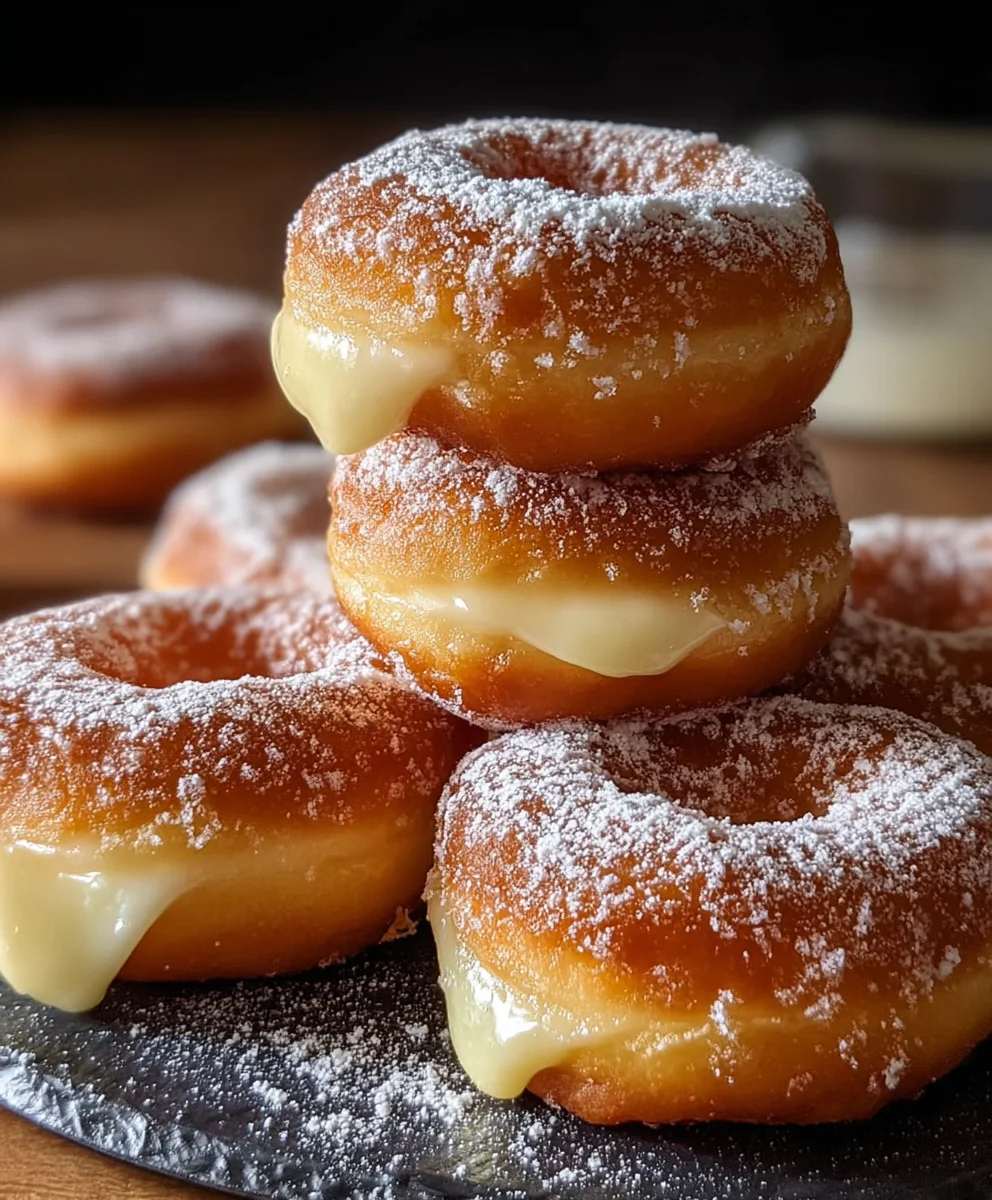
As soon as the donuts are cool enough to handle but still warm, you can dust them with powdered sugar, if desired. This adds a touch of sweetness that beautifully complements the savory mozzarella cheese within. For an extra indulgent treat, you can even warm up a little extra milk and whisk in some powdered sugar to create a simple glaze. Drizzle this glaze over the warm donuts. Serve your Milky Cheese Donuts immediately for the best texture and flavor experience. The melted mozzarella inside creates a wonderfully gooey and satisfying bite, making these a unique and delicious treat that is sure to be a hit.
Conclusion:
And there you have it – your very own batch of delicious Milky Cheese Donuts! This recipe is a delightful journey, resulting in soft, fluffy donuts with a subtle, savory cheese flavor that perfectly balances the sweetness. I hope you’ve enjoyed making and will love savoring these unique treats. Remember, the beauty of this recipe lies in its simplicity and adaptability. Don’t be afraid to experiment with different cheeses or glazes to make them your own.
For serving suggestions, these Milky Cheese Donuts are fantastic on their own with a cup of coffee or tea. They also make an impressive addition to any brunch spread or a unique dessert option for gatherings. Consider a light dusting of powdered sugar, a drizzle of honey, or even a sprinkle of chives for a more savory profile.
I truly encourage you to give this recipe a try. It’s a wonderfully rewarding bake that is sure to impress both your taste buds and your guests. Happy baking!
Frequently Asked Questions:
Can I make these Milky Cheese Donuts ahead of time?
Yes, you can! Milky Cheese Donuts are best enjoyed fresh, but they can be made a few hours in advance. Store them in an airtight container at room temperature. For optimal texture, it’s best to gently reheat them for a few seconds in a microwave or toaster oven before serving.
What kind of cheese works best in Milky Cheese Donuts?
While cheddar is a popular and accessible choice that provides a lovely mild flavor, you can experiment! Gruyere offers a nuttier depth, and a blend of mozzarella and parmesan can create a wonderfully melty interior. The key is to use a cheese that melts well and has a flavor that complements sweetness.
Can I freeze Milky Cheese Donuts?
It’s not recommended to freeze these Milky Cheese Donuts once they are baked and glazed. The texture can become somewhat compromised upon thawing. However, you can prepare the dough and refrigerate it overnight before shaping and frying them the next day.
Melt-in-Your-Mouth Milky Cheese Donuts
Soft, fluffy, and slightly savory donuts with a delightful melted mozzarella cheese filling. Perfect for a unique breakfast or snack.
Ingredients
-
2 cups all-purpose flour
-
1 cup whole milk, warm (about 110°F)
-
2 tablespoons sugar
-
2¼ teaspoons active dry yeast (1 packet)
-
½ teaspoon salt
-
1 large egg
-
4 tablespoons unsalted butter, melted
-
1 cup shredded mozzarella cheese
-
Vegetable or canola oil, for frying
-
Powdered sugar, for dusting (optional)
Instructions
-
Step 1
In a large mixing bowl, combine warm whole milk and sugar. Sprinkle yeast over the surface. Let sit for 5-10 minutes until foamy. -
Step 2
To the foamy yeast mixture, add salt, egg, and melted butter. Whisk gently. Gradually add flour, mixing until a shaggy dough forms. -
Step 3
Turn dough onto a floured surface and knead for 8-10 minutes until smooth and elastic. Knead in shredded mozzarella cheese until evenly distributed. -
Step 4
Place dough in a lightly greased bowl, cover, and let rise in a warm place for 1 to 1.5 hours, or until doubled in size. -
Step 5
Gently punch down dough, turn onto a floured surface, and shape into donuts or donut holes. Place on parchment-lined baking sheets, cover loosely, and let rise for another 30-45 minutes. -
Step 6
Heat vegetable or canola oil in a deep pot to 350-375°F. Carefully fry 2-3 donuts at a time for 1-2 minutes per side until golden brown. Drain on a wire rack. -
Step 7
Dust warm donuts with powdered sugar, if desired. Serve immediately for the best gooey, cheesy texture.
Important Information
Nutrition Facts (Per Serving)
It is important to consider this information as approximate and not to use it as definitive health advice.
Allergy Information
Please check ingredients for potential allergens and consult a health professional if in doubt.